If you are wondering how to start a printing business in Nigeria, the honest answer is that you can start small, but you should not start blind. Printing is steady work because businesses, churches, schools and event planners need cards, banners, flyers, receipts and stickers again and again. The risk is buying expensive machines before you have customers.
This guide explains the main business models, the equipment you may need, where the costs come from, how to price jobs and how to find your first customers. Equipment prices change often, so this guide does not quote figures; always confirm with sellers before you budget.
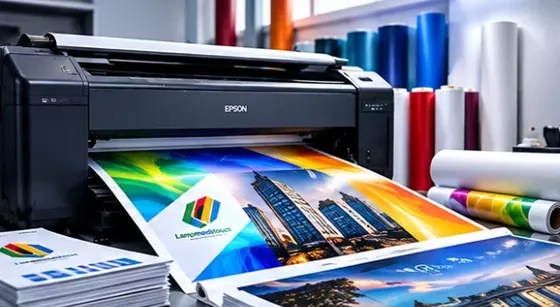
Table of Contents
Table of Contents
Why a printing business can work in Nigeria
Every small business needs printed material at some point: business cards for networking, receipts for sales, banners for a shop opening, stickers or labels for products, T-shirts for a team or event. Many of these jobs repeat, which is what a printing business needs, because repeat customers cost far less to win than new ones.
Digital printing also lets you take small orders, which suits individuals and small shops that cannot order thousands of copies. Our article on why digital printing is not dying explains why demand for small digital runs keeps growing.
Two warnings apply, however. Competition is high in most cities, and printing involves costs people forget: power, ink, material waste, reprints and delivery. A successful shop wins on reliability and service as much as price.
How to start a printing business in Nigeria: choose your model first
There is more than one way to approach how to start a printing business in Nigeria. The right model depends on your capital and your skills.
| Model | What it means | Capital needed | Main risk |
|---|---|---|---|
| Design and print broker | You take orders, design the artwork and arrange printing with a trusted production partner | Low: a computer, software and phone | Quality depends on your partner; margins are smaller |
| Small-format shop | You own a digital or DTF printer, a heat press and finishing tools for cards, stickers, T-shirts and small jobs | Medium to high | Idle machines if orders are few |
| Large-format shop | You print banners, posters and signage on a wide-format machine | High | Material cost and space |
| Full print press | Production digital press or offset press for high volumes | Very high | Needs steady large orders |
Many successful shops begin as brokers or designers, build a customer list, and buy their first machine only when they can predict how often it will run. That is the safest way of learning how to start a printing business in Nigeria without borrowing heavily.
How to start a printing business in Nigeria: equipment and costs
Your list depends on your products, but most small shops need the same basics:
- A reliable computer and design software (see our comparison of graphic design software in Nigeria).
- A printer matched to your products: an office or inkjet printer for paper work, a DTF printer for T-shirts, or a wide-format machine for banners.
- Finishing tools: a paper cutter, laminator, heat press or binder, depending on what you sell.
- Power backup: a generator or inverter, plus fuel or battery costs. Power cuts waste material mid-job.
- Materials stock: paper, vinyl, ink, transfer film and packaging.
- Workspace and internet for receiving files and talking to customers.
For price checks, look at current listings and get written quotes. Small DTF printers are advertised on classifieds such as Jiji, and large-format printers from brands such as HP and Epson are sold by Nigerian retailers such as Chert.ng. Costs rise quickly with machine size, so a small-format start needs far less capital than a large-format one. These are listings, not quotes: confirm the current price, warranty, spare parts and who services the machine before paying.
If you buy used equipment, inspect the machine, ask for a test print, avoid paying in advance for delivery, and confirm that spare parts and ink are available locally.
Register your business and keep records
Any guide on how to start a printing business in Nigeria should include registration. Register your business name with the Corporate Affairs Commission (CAC) so you can open a business bank account, issue proper receipts and win larger customers. Get a Tax Identification Number and keep simple records of every job, expense and payment from the first day. If you plan to run large machines or a workshop, also check any local council or environmental requirements for your area.
Use proper receipts and invoices from the start. Our guides on the difference between an invoice and a receipt and our receipt book printing cost guide explain what each document should contain.
How to start a printing business in Nigeria: pricing your jobs
The pricing method matters more than the machine when you learn how to start a printing business in Nigeria. Price every job from its real cost, not from what the shop next door charges. A simple formula works for most jobs:
Price = material cost + power and machine cost + design time + delivery + a margin that pays you for your work.
- Add a design fee if the customer does not bring a print-ready file.
- Charge a minimum for tiny jobs, because setup takes the same time as bigger ones.
- Banners are normally priced by area, so work out your price per square foot first. See our flex banner price list for an example.
- Take a deposit before you start, and show a proof before you print.
- Keep a written price list and review it when material prices change.
Our own printing prices are published in the Print Shop, so customers see the price before they order. That kind of clarity builds trust faster than “call for price”.
How to start a printing business in Nigeria: finding your first customers
You do not need advertising money to get started, and this is the part of how to start a printing business in Nigeria that costs least. These channels cost little and work well in Nigerian cities and towns:
- Your own network. Tell every shop owner, church and school you know that you now print. Give them a simple price list.
- WhatsApp. Set up WhatsApp Business with a catalogue, a short description and quick replies for prices.
- Sample work. Print a few good samples and photograph them on Instagram and TikTok. People trust what they can see.
- Google Business Profile. A free profile helps local customers find you. Our web design guide for small businesses explains how a simple website supports it.
- Event planners, churches and schools. They place repeat orders for programmes, banners, certificates and T-shirts.
- Referrals. Ask every happy customer to tell one other business.
Before you launch, build a simple identity for your own shop. Our brand identity checklist lists what to prepare first.
Mistakes to avoid when you start
- Buying a big machine before you have a steady flow of orders.
- Underpricing to win jobs and then struggling to pay for materials.
- Starting a job without a deposit or an approved proof.
- Ignoring the cost of power, ink waste and reprints.
- Having no backup of customers’ files.
- Promising delivery dates you cannot keep.
A simple 90-day plan
- Days 1 to 15: choose your model, register your business name, set up WhatsApp Business and write a price list.
- Days 16 to 45: build samples, take your first small orders and collect feedback and photos with permission.
- Days 46 to 90: review your prices, decide whether repeat work justifies buying equipment, and ask for quotes on the machine that fits your best-selling product.
How much does it cost to start a printing business in Nigeria?
It depends on your model. A design-and-broker model needs mainly a computer, software and working capital. A small-format shop with a DTF or digital printer needs much more capital once finishing tools and power backup are included. Always get fresh quotes.
Do I need to register a printing business?
Registering your business name with the CAC is strongly recommended. It lets you open a business account and work with larger customers. Check any local requirements for running machines.
What is the most profitable thing to print?
It varies. Repeat products such as business cards, receipts, banners, stickers and T-shirts sell steadily, but profit depends on your real costs, so work out your margin per job.
Can I start a printing business without a printer?
Yes. Many people start as designers and brokers, take orders and manage production with a trusted partner while they build a customer base.
How do I get my first customers?
Start with your network, WhatsApp, sample work on social media and local organisations such as churches, schools and shops.
Building your own print or design business?
A clear brand and a simple price list win customers faster. If you want help with your logo, flyers or stationery, we can design them for you.
See design servicesTalk to us